
From recipe to shelf, one system.
Recipes, production runs, batch traceability, use-by dates and Xero integration — built for small Australian producers who are too busy making things to babysit software.
The food-manufacturing gap BSimple fills
Small food producers sit between systems: enterprise ERP is priced like a factory floor, and generic small-business software doesn’t understand that flour becomes bread. So the recipes live in a spreadsheet, batches live in a notebook, use-by dates live in somebody’s head, and the books get reconciled in a monthly act of love.
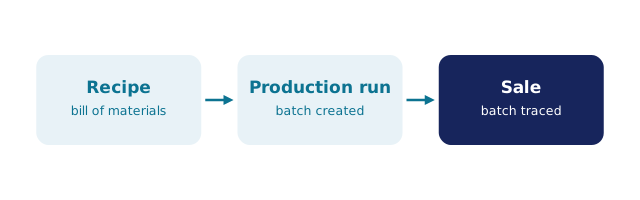
BSimple closes the gap with a model built around how food production actually works:
- Recipes define finished products by their ingredients — bill-of-materials style, with variants per pack size or blend
- Production runs recalculate every ingredient live against planned quantity, then create batches that consume stock
- Batch records capture what went in and where it went out — traceability as a by-product
- Use-by dates ride with date-sensitive stock so older product ships first
- Finished goods sell through the ordering portal, the POS screen or manual orders
- The sale syncs to Xero like every other order
Built on Australian production floors
BSimple’s home industries include packaging and coffee roasting — both food-adjacent, both batch-driven. The production module is designed for real runs: adjust mid-batch when the yield surprises you, and the live recalculation keeps the numbers honest without a re-planning session.
Ingredients re-order themselves.
Set reorder levels on flour, hops, packaging and labels. When a run (or a busy week) dips the stock, the Auto Builder drafts the purchase order — see purchase order automation. Shortages discovered mid-production stop being a thing.
- Ingredient reorder levels watched continuously
- Production shortfalls visible before you start the run
- Supplier POs drafted, reviewed and sent in one pass
Food manufacturing FAQs
What does a small food manufacturer actually need from software?
Four things: recipes that scale (production runs recalculate ingredients live), traceability (batch records that write themselves), shelf-life control (use-by dates travelling with stock), and books that reconcile (Xero sync). BSimple does all four in one system.
Can BSimple handle multiple recipes for the same product?
Yes — recipes are records, so variants (different pack sizes, seasonal blends) are separate recipes that produce the same finished product.
How does this help with food safety questions?
Batch tracking means an ingredient-to-customer trace is a lookup, not an archaeology project — exactly what a quality callback, audit or retail listing asks for.
Does it handle both ingredients and finished goods?
Yes — ingredients are stock items consumed by production; finished goods are stock items created by production and sold through the portal, POS or manual orders. Same ledger, two layers.
See it running on your numbers
Start a free BSimple trial — no credit card, just your email — or talk to a real human about what this could look like in your business.
Free trial via bsimple.com.au · No credit card required · Cancel anytime