
Recipes in. Batches out.
Define the recipe once, run production with live ingredient recalculation, and let the batch consume stock as it lands. Made for makers.
Production software that speaks “maker”
If you make things — roasting coffee, blending cleaning products, baking, brewing, bottling — your inventory has two layers: what you buy and what you sell. Most small-business software only handles one of them properly, which is why the recipe lives in a spreadsheet and the “system stock” for flour, hops or green beans is a work of fiction.
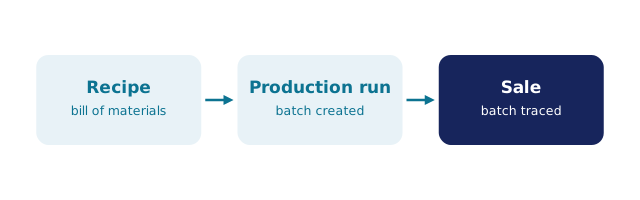
BSimple treats recipes as first-class records. A recipe is the bill of materials for a finished product; running production recalculates every ingredient live against the planned quantity, and committing the run creates a batch that consumes ingredient stock automatically. The fiction ends.
Built on real production floors
This module grew out of BSimple’s home turf — a packaging business and a queue of coffee roasters. It is designed for the way small production actually runs: plan in the morning, adjust mid-run when the roaster behaves differently than the spreadsheet hoped, commit when it’s done. Live recalculation means the adjustment never breaks the numbers.
The batch flows downhill from there.
- Traceability — every batch is a tracked lot, from ingredients in to orders out (batch tracking)
- Sales — finished goods become portal and counter products instantly
- Purchasing — ingredients below reorder level trigger Auto Builder drafts (purchase order automation)
- Books — the sale of the batch syncs to Xero like any other order (Xero integration)
Production FAQs
What is a recipe in BSimple?
A recipe defines a finished product in terms of its ingredients and quantities — like a bill of materials for things you make. Coffee roasts, food batches, cleaning products and blends all fit the same model.
What happens when I run production?
You pick the recipe and the planned quantity. BSimple recalculates every ingredient live — scale the batch up or down and watch the requirement move — then creates the batch and consumes the stock when you commit.
Are batches tracked for traceability?
Yes — each production run creates a batch record, which carries into batch and lot tracking. You can trace what went into a batch and where it went out.
Can production consider what stock I actually have?
Yes — because recipes, ingredients and inventory share one database, planned runs are visible against live ingredient stock, and shortfalls flow into purchasing via reorder levels and the Auto Builder.
See it running on your numbers
Start a free BSimple trial — no credit card, just your email — or talk to a real human about what this could look like in your business.
Free trial via bsimple.com.au · No credit card required · Cancel anytime